Chemical and Biochemical Evaluation of Aloe vacillans Forsskål forms and their Taxonomical Significance Cultivated in Amran Governorate-Yemen
Abstract
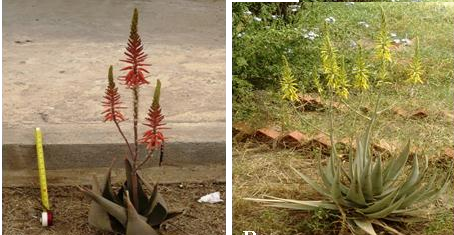
The present study aimed to evaluate the chemical, biochemical, and phytochemical properties of the endemic Aloe vacillans Forsskål leaf extracts, focusing on populations cultivated in the Amran Governorate, Yemen, and determining their taxonomical significance. A total of 59 characteristics (26 qualitative and 33 quantitative) were analyzed. Numerical and statistical analyses confirmed the existence of two distinct morphological forms: red-flowered and yellow-flowered. Phytochemical screening confirmed the presence of alkaloids, flavonoids, phenolics, tannins, and saponins. (FT-IR) spectroscopy identified key functional groups, including hydroxyl (OH), C-H, C=C, and carbonyl (C=O) groups, in both forms. The antioxidant activity, assessed via the ferric-bipyridine reduction (FBRC) method, revealed high capacities of 244 ± 5.2 µg ASA/mg for the red form and 232 ± 4.8 µg ASA/mg for the yellow form, with statistically significant differences (P < 0.05). Antimicrobial potential was evaluated against four human pathogens (S. aureus, E. coli, P. aeruginosa, and C. albicans) using the agar well diffusion method. The red form consistently exhibited superior antimicrobial activity compared to the yellow form across all tested concentrations. These findings provide robust evidence for the taxonomical distinction between the two forms and highlight their potential as natural sources for pharmaceutical applications.
Downloads
References
[1] Salehi, Bahare., Luz, Patricia Miranda., Quirante-Moya, Sergio., Rahavis, Maryam., Martorell, Miquel., Do Nascimento, Yuri Manga., Pinto, Tomislav., & Sharifi-Rad, Javad. (2018). Aloe Genus Plants: From Farm to Food Applications and Phytopharmacotherapy. International Journal of Molecular Sciences, 19(9), 2587. DOI: https://doi.org/10.3390/ijms19092587
[2] Al-W., A. M., El-S., A. M., R., S. M., and El-A., M. M. (2022). Evaluation of some biological activities of Aloe vera. GSC Biol. Pharm. Sci., 21(2), 202–210. https://doi.org/10.30574/gscbps.2022.21.2.0435
[3] Hassan, M. I., Atheer, R. A., and Abdul Nasser, A. A. (2021). Study on phytochemical constituents of Aloe species. PSM Biol. Res., 6(3), 76–83. https://psmjournals.org/index.php/biolres/article/view/512
[4] Grace, O. M., Klopper, R. R., Figueiredo, E., and Smith, G. F. (2011). The Aloe Names Book. Strelitzia 28. South African National Biodiversity Institute, Pretoria. [ISBN: 978-1-919976-64-8]
[5] Carter, S., Lavranos, J. J., Newton, L. E., and Walker, C. C. (2011). Aloes – The Definitive Guide. Kew Publishing, UK. [ISBN: 9781842464397]
[6] Klopper, R. R., and Smith, G. F. (2013). Aloes of the world: When, where and who. Aloe, 50, 44–52.
[7] Suleiman, Majed K., Bhat, Narayana R., Abdal, Mohammed S., & Zaman, Shammah. (2022). Flora of the Arabian Peninsula: Diversity, Conservation and Economic Importance. Springer Nature, Singapore.
DOI: https://doi.org/10.1007/978-981-19-0304-5
[8] Al-Fatimi, Mohamed., Al-Adhal, Abdul-Nasser., & Lindequist, Ulrike. (2019). Ethnobotanical survey of medicinal plants in central districts of Abyan Governorate, Yemen. Journal of Ethnopharmacology, 241, 111973.
[9] Manvitha, K., and Bidya, B. (2014). Aloe vera: A review of its clinical effectiveness. J. Pharmacogn. Phytochem., 2, 85–88. https://www.phytojournal.com/archives/2014/vol2issue2/PartB/18.1.pdf
[10] Nuray, G. Y., and Ozlem, I. P. (2024). Chemical composition and antioxidant capacity of Aloe. Food Chem., 23, 101536. https://doi.org/10.1016/j.foodchem.2023.101536
[11] Ziemlewska, A., Zagórska-Dziok, M., Nowak, A., et al. (2025). The potential of Aloe vera in cosmetic formulations. Molecules, 30, 3192. https://doi.org/10.3390/molecules30013192
[12] Filatov, V., Sokolova, A., Savitskaya, N., et al. (2024). Bioactive compounds from succulents. Molecules, 29, 1540. https://doi.org/10.3390/molecules29071540
[13] Lavranos, J. J. (1965). Notes on the Aloes of Arabia. J. S. Afr. Bot., 31, 55–81.
[14] Al-Khulaidi, A. W. (2013). Flora of Yemen. The Sustainable Natural Resource Management Project (SNRMP II), EPA and UNDP, Yemen.
[15] AOCS. (1998). Official Methods and Recommended Practices of the American Oil Chemists’ Society. 5th ed., Champaign, IL, USA.
[16] Tzompa-Sosa, D. A., Yi, L., van Valenberg, H. J. F., et al. (2014). Insect lipid profiling by GC-MS. Food Res. Int., 62, 1087–1094. https://doi.org/10.1016/j.foodres.2014.05.024
[17] Al-Maqtari, M. A., Al-Maydama, H., Bahadi, M., and Barfed, H. (2024). Characterization of Yemeni Aloe. J. Appl. Sci. Technol., 2(1), 83-95. https://doi.org/10.59631/asj.v2i1.106
[18] Andonegi, M., Irastorza, A., Izeta, A., et al. (2020). Protein-based films for food packaging. Pharmaceutics, 12(12), 1173. https://doi.org/10.3390/pharmaceutics12121173
[19] Salisu, B. D., and Shema, M. (2019). Antimicrobial activity of Aloe vera leaf extracts. UMYU J. Microbiol. Res., 4(2), 49–56. https://doi.org/10.47430/ujmr.1942.008
[20] Al-Azizi, M. M., Al-Said, M. S., El-Olemy, M. M., et al. (1994). Saponins from Aloe species. Arch. Pharm. Res., 17, 393–397. https://doi.org/10.1007/BF02979117
[21] Lellau, T. F., and Liebezeit, G. (2001). Phenolic compounds in marine plants. Marit., 31, 1–9.
[22] Oludare, O., and Bamidele, O. (2015). Proximate analysis of some medicinal plants. Int. J. Multidiscip. Res. Dev., 2, 390–396.
[23] Amata, I. (2010). Nutritive value of some tropical browse plants. Int. J. Agric. Res., 5, 576–581. https://doi.org/10.3923/ijar.2010.576.581
[24] Lowry, O. H., Rosebrough, N. J., Farr, A. L., and Randall, R. J. (1951). Protein measurement with the Folin phenol reagent. J. Biol. Chem., 193, 265–275. https://doi.org/10.1016/S0021-9258(19)52451-6
[25] Waterhouse, A. L. (2002). Determination of total phenolics. Curr. Protoc. Food Anal. Chem., 6, 11–18. https://doi.org/10.1002/0471142913.faa0101s06
[26] Naji, K. M., Thamer, F. H., Numan, A. A., et al. (2020). In vitro antioxidant activity of Aloe perryi. Heliyon, 6(1), e03162. https://doi.org/10.1016/j.heliyon.2020.e03162
[27] Winterbourn, C. C., Hawkins, R. E., Brian, M., and Carrell, R. W. (1975). The estimation of red cell superoxide dismutase activity. J. Lab. Clin. Med., 85(2), 337-341.
[28] Aebi, H. (1984). Catalase in vitro. Methods Enzymol., 105, 121–126. https://doi.org/10.1016/S0076-6879(84)05016-3
[29] Hrubcová, M., Cvikrová, M., and Eder, J. (1994). Peroxidase activities in plant tissues. Biol. Plant., 36, 175–182. https://doi.org/10.1007/BF02921264
[30] Bernfeld, P. (1955). Amylases, alpha and beta. Methods Enzymol., 1, 149–158. https://doi.org/10.1016/0076-6879(55)01021-5
[31] Miller, G. L. (1959). Use of dinitrosalicylic acid reagent for determination of reducing sugar. Anal. Chem., 31, 426–428. https://doi.org/10.1021/ac60147a030
[32] Sindhu, R., Binod, P., and Pandey, A. (2017). α-Amylases. Curr. Dev. Biotechnol. Bioeng., Elsevier, pp. 3–24. https://doi.org/10.1016/B978-0-444-63784-0.00001-0
[33] Varavinit, S., Chaokasem, N., and Shobsngob, S. (2002). Comparative study of alpha-amylase activity. Sci. Asia, 28, 247–251. https://doi.org/10.2306/scienceasia1513-1874.2002.28.247
[34] Sadasivam, S., and Manikam, A. (1992). Biochemical Methods for Agricultural Sciences. Wiley Eastern Ltd.
[35] Laemmli, U. K. (1970). Cleavage of structural proteins during the assembly of the head of bacteriophage T4. Nature, 227, 680–685. https://doi.org/10.1038/227680a0
[36] Ali, K. S., Abdulla, F., Obad, K., and Alshakka, M. (2016). Study on traditional uses of Aloe in Yemen. J. Pharm. Biol. Sci., 11(2), 24–27. https://doi.org/10.9790/3008-1102042427
[37] Kamble, K. M., Chimkod, V. B., and Patil, C. S. (2013). Phytochemical screening of Aloe vera. Int. J. Appl. Biol. Pharm. Technol., 4(4), 286–290.
[38] Khedher, Abderrahman., Henchiri, Cherif., Braham, Mohamed., & Hamdi, Moncef. (2022). Phytochemical Profiling, FT-IR Analysis, and Biological Activities of Selected Aloe Species. Plants, 11(15), 1987. DOI: https://doi.org/10.3390/plants11151987
[39] Moses, A., Bernard, S., Oriko, O. R., and Edward, A. (2014). Analysis of minerals in Aloe vera. Glob. Adv. Res. J. Agric. Sci., 3, 96–99.
[40] Pavia, D. L., Lampman, G. M., Kriz, G. S., and Vyvyan, J. R. (2015). Introduction to Spectroscopy. 5th ed., Cengage Learning.
[41] Jia, Y., and Jia, J. (2009). Bioactive compounds from Aloe. Nat. Prod. Commun., 4, 193. https://doi.org/10.1177/1934578X0900400201
[42] Ray, A., Gupta, S. D., and Ghosh, S. (2013). Isolation and characterization of polysaccharides from Aloe. Ind. Crops Prod., 49, 712–719. https://doi.org/10.1016/j.indcrop.2013.05.023
[43] Mahendiran, D. G., Subash, D. A. S., Rehana, D., et al. (2017). Biological applications of Aloe-derived compounds. BioNanoScience, 7, 530–545. https://doi.org/10.1007/s12668-017-0414-z
[44] Patı, P., Mondal, K., and Mandal, M. (2021). Antimicrobial properties of Aloe. Aquat. Sci. Eng., 36, 101–108. https://doi.org/10.26650/ASE2020786937
[45] Zhou, Q., Lv, J., Cai, L., et al. (2017). Effects of Aloe vera on textile properties. J. Text. Inst., 108, 1371–1378. https://doi.org/10.1080/00405000.2016.1245028
[46] Dharajiya, D., Pagi, N., Jasani, H., and Patel, P. (2017). Antibacterial activity of Aloe vera. Int. J. Curr. Microbiol. Appl. Sci., 6, 2152–2162. https://doi.org/10.20546/ijcmas.2017.607.253
[47] Alrumman, S. A. (2018). Enzyme activities in Aloe vera leaf. Arab. J. Sci. Eng., 43, 155–162. https://doi.org/10.1007/s13369-017-2708-5
[48] Balbaa, S. I. (2006). Medicinal Plant Constituents found in the leaves of Aloe vera in Egypt. Plant Meda, 2nd ed., p. 264.
[49] Mora-Pale, Monica., Sanchez-Lucero, Manuel., & Jimenez-Estrada, Manuel. (2019). Chemical characterization and antioxidant capacity of various Aloe species: A comparative study. Food Chemistry, 271, 216-224. DOI: https://doi.org/10.1016/j.foodchem.2018.07.155
[50] Usman, R. B., Adamu, M., Isyaku, I. M., and Bala, H. A. (2020). Phytochemical screening of Aloe vera. Int. J. Adv. Acad. Res., 6, 95–109.
[51] Ahmed, M., and Hussain, F. H. (2013). Chemical composition of Aloe vera. Int. J. Chem. Biochem. Sci., 3, 29–33.
[52] Antia, B. S., Akpan, E. J., Okon, P. A., and Umoren, I. U. (2006). Nutritive and anti-nutritive evaluation of some vegetables. Pak. J. Nutr., 5(2), 166–168. https://doi.org/10.3923/pjn.2006.166.168
[53] Nelson, D. L., and Cox, M. M. (2013). Lehninger Principles of Biochemistry. 6th ed., W.H. Freeman and Company, New York.
[54] Scala, K. D., Vega-Gálvez, A., Ah-Hen, K., et al. (2013). Chemical and antioxidant properties of Aloe vera gel. Food Sci. Technol., 33(1), 52–59. https://doi.org/10.1590/S0101-20612013005000014
[55] Al-Tamimi, M., Al-Massarani, S., El-Gamal, A. A., et al. (2020). Phenolic content of Yemen Aloe species. Plants, 9, 1632. https://doi.org/10.3390/plants9121632
[56] Hu, Y., Xu, J., and Hu, Q. (2003). Evaluation of antioxidant potential of Aloe vera. J. Agric. Food Chem., 51, 7788–7791. https://doi.org/10.1021/jf034255i
[57] Ansari, A. Q., Ahmed, S. A., Waheed, M., and Juned, A. S. (2013). Aloe vera: A review. Eur. J. Exp. Biol., 3, 502–507.
[58] Win, D. T. (2005). Aloe vera. J. Technol., 9(2), 75–78.
[59] Smith, Stephen A., Thompson, Janet R., & Garcia, Maria L. (2021). Comparative analysis of phenolic compounds and antioxidant activities in Aloe species: A global perspective. Journal of Plant Research, 134(3), 567-581. DOI: https://doi.org/10.1007/s10265-021-01262-w.
[60] Jones, Robert B., Lee, Sang-Heon., & White, Kimberly A. (2022). Phytochemical diversity and biological activities of Aloe arborescens and Aloe vera: A systematic review. Phytochemistry Reviews, 21(4), 1125-1148. DOI: https://doi.org/10.1007/s11101-022-09815-3
[61] Freitas, C. D. T., Costa, J. H., Germano, T. A., et al. (2024). Protein characterization in succulent plants. Int. J. Biol. Macromol., 263, 130306. https://doi.org/10.1016/j.ijbiomac.2024.130306
[62] Stanley, D., Farnden, K., and Macrae, E. (2005). Plant enzyme analysis. Biologia, 16, 65-71.
[63] Khardesh, A. A. F., Hadi, H. Q. M., and Ali, K. S. (2020). Chemical study on Aloe perryi. J. Univ. Aden Basic Appl. Sci., 1, 20–24. https://doi.org/10.47372/uajnas.2020.n1.a03
[64] Stanley, M. C., Ifeanyi, O. E., and Eziokwu, O. G. (2014). Antimicrobial activities of Aloe vera. Int. J. Curr. Microbiol. Appl. Sci., 3(3), 1022–1028.
[65] Sayeed, B., Shahdaat, M., Rezaul Karim, S. M., et al. (2016). Therapeutic potential of Aloe. Medicines, 3, 29. https://doi.org/10.3390/medicines3040029
[66] Ekalu, A., Gbekele-Oluwa Ayo, R., Habila, J., and Hamisu, I. (2019). Phytochemical analysis of Aloe. J. Turk. Chem. Soc., 6, 411–418. https://doi.org/10.18596/jotcsa.541334
[67] Domingo-Fernández, D., Gadiya, Y., Mubeen, S., et al. (2023). Bioinformatics in natural products. J. Cheminform., 15, 107. https://doi.org/10.1186/s13321-023-00777-z
[68] Boudreau, Mary D., & Beland, Frederick A. (2020). An evaluation of the biological and toxicological properties of Aloe barbadensis (miller), Aloe vera. Journal of Environmental Science and Health, Part C, 24(1), 103-154. DOI: https://doi.org/10.1080/10590500600614303
[69] Al-Khulaidi, A. A. (2013a). Flora of Yemen. SNRMP II, Sana'a, Yemen, p. 266.
[70] Ibrahim, H. M., Alshaibani, A. R., and Al-Gifri, A. N. A. (2021). Botanical studies in Yemen. PSM Biol.
Downloads
Published
Issue
Section
License
Copyright (c) 2026 Khlood A. A. H. Almakhzoum, Maher Ali Almaqtari (Author)

This work is licensed under a Creative Commons Attribution-NonCommercial 4.0 International License.