Toxic metals in facial cosmetics: Chemical Analysis Lead and Cadmium in lipstick, foundation creams sold at Aden market, Yemen
DOI:
https://doi.org/10.47372/xeevzv38Keywords:
Lead, Cadmium, Foundation cream, Lipstick, ICP-OES, Aden,YemenAbstract
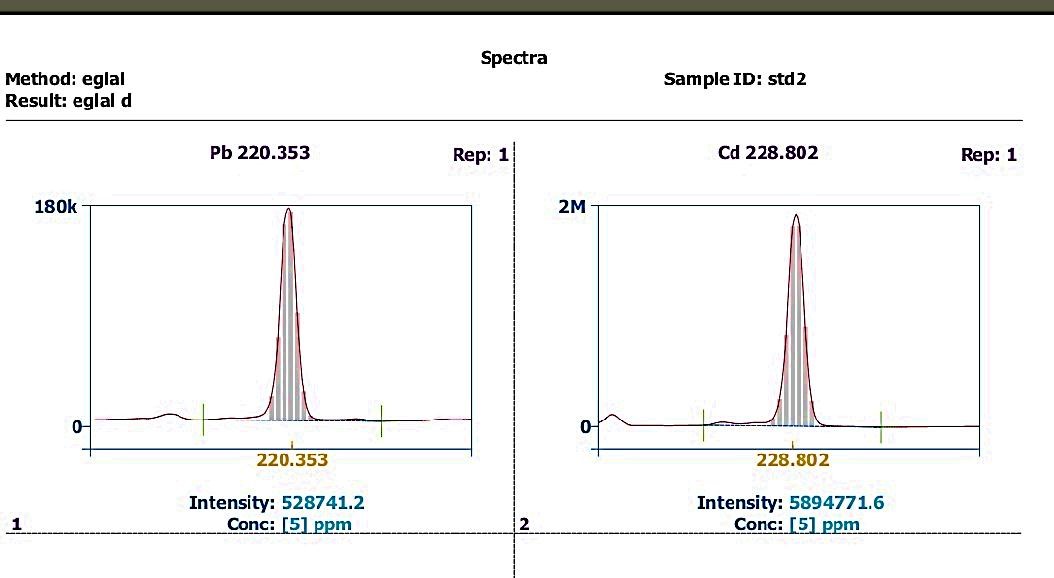
Cosmetics increase exterior appearance attractiveness; however, they may constitute a risk to users owing to hazardous chemical compositions. The study aimed to analyze the levels of lead (Pb) and cadmium (Cd) in lipsticks and foundation creams sold at Aden markets, Yemen. The samples of the study included ten (10) samples (6 foundation creams and 4 lipsticks), and they were analyzed for lead and cadmium content using Inductively Coupled Plasma-Optical Emission Spectrometer (ICP-OES). The concentration range of Pb and Cd was from 0.575 ppm to 234.750 ppm and 0.000 ppm to 0.108 ppm, respectively, in foundation creams. 0.000 ppm to 331.750 ppm, 0.000 ppm to 0.083 ppm, respectively, in lipsticks. The majority of Pb and Cd contents were within the European Union (EU) and Food and Drug Administration (FDA) limits, except two samples: Dermacol Cream and Super Stay Matte INK lipstick. Their lead content exceeded the allowed limits. Long-term exposure to these chemicals can pose substantial health risks, notably skin cancer. To maintain human safety, cosmetic items should be monitored constantly, notably for adulteration.
Downloads
References
Chen, X., Sullivan, D. A., Sullivan, A. G., Kam, W.R., & liu, Y.(2018). Toxicity of cosmetic preservatives on human ocular surface and adnexal cells. Experimental Eye Research, 170,188-197.
2. Burger, P., Landreau, A., Azoulay, S., Michel, T., &Fernandez, X. (2016). Skin whitening cosmetics: Feedback and challenges in the development of natural skin lighteners. Cosmetics, 3(4),36.
3. Naveed, N.(2014). The perils of cosmetics. Journal of pharmaceutical sciences and research, 6(10), 338.
4. .EU, European Union. Regulation (EC) No 1223/2009 of the European Parliament and of the Council of 30 November 2009 on cosmetic products. Official Journal of the European Union L, 342, 22/12/2009, p. 59.
5. .Oklo, A. D., Enenche, D. E., & Aondoakaa, M. A. M. (2020). Heavy metals in some lipstick products marketed in Makurdi metropolis, Benue state Nigeria. International Journal of Environment, Agriculture and Biotechnology, 5(2).
6. Borowska, S., & Brzóska, M. M. (2015). Metals in cosmetics: implications for human health. Journal of applied toxicology, 35(6), 551-572.
7. .Skobeeva, S., Banyard, A., Rooney, B., Thatti, R., Thatti, B., & Fletcher, J. (2022). Near-infrared spectroscopy combined with chemo metrics to classify cosmetic foundations from a crime scene. Science & Justice, 62(3), 327-335.
8. .Brzóska, M. M., Galażyn- Sidorczuk, M., & Borowska, S. (2018). Metals in cosmetics. Metal Allergy: From Dermatitis to Implant and Device Failure, 177-196.
9. .Kim, H. S., Kim, Y. J., & Seo, Y. R. (2015). An overview of carcinogenic heavy metal: molecular toxicity mechanism and prevention. Journal of cancer prevention, 20(4), 232.
10. .Boca, B., Pino, A., Alimonti, A., & Forte, G. (2014). Toxic metals contained in cosmetics: a status report. Regulatory Toxicology and Pharmacology, 68(3), 447-467.
11. .Senesse, P., Méance, S., Cottet, V., Faivre, J.,& Boutron-Ruault, M.C.(2004).High dietary iron and copper and risk of colorectal cancer: a case-control study in Burgundy, France. Nutrition and cancer,49(1),66-71.
12. Agoramoorthy, G., Chen, F. A., & Hsu, M.J. (2008). Threat of heavy metal pollution in halophytic and mangrove plants of Tamil Nadu, India. Environmental Pollution,155(2),320-326.
13. .Al Amry, M., Al-Saikhan, F., & Ayoubi, A. (2011). Toxic effect of cadmium found in eyeliner to the eye of a 21-year-old Saudi woman: a case report. Saudi Pharmaceutical Journal, 19(4), 269-272.
14. .Smith, V. M., Clark, S. M., & Wilkinson, M. (2016). Allergic contact dermatitis in children: trends in allergens, 10 years on. A retrospective study of 500 children tested between 2005 and 2014 in one UK center. Contact Dermatits,74(1),37-43.
15. .Saleh, S. M. K., Ghani, O. A. A., Amro, A. N., & Alraddadi, T. S. (2020). Investigation OF Mercury and Titanium Contents in Skin Whitening Creams Commonly Usedin Yemen by ICP-MS. Electronic Journal of University of Aden for Basic and Applied Sciences, 1(3), 128-134.
16. .Saleh, S. M. K., Al Sarahe, A.T., & Ghani, O.A.A. (2016). Assessment Of Some Heavy Metal Contents In Skin Whitening Cosmetics Using ICP-OES. Power (W),1(15), 195.
17. .Alsaffar, N. M., & Hussein, H. J. (2014). Determination of heavy metals in some cosmetics available in locally markets. IOSR J Environ Sci Toxicol Food Technol, 8(1), 9-12.
18. .Safavi, S., Najarian, R., Rasouli- Azad, M. O.R.A.D., Masoumzadeh, S., Ghaderi, A., & Eghtesadi, R, (2019). A narrative review of heavy metals in cosmetics; health risks. International Journal of pharmaceutical Research (09752366), 11(4).
19. Pandey, G., & Madhuri, S. (2014). Heavy metals causing toxicity in animals and fishes. Research Journal of Animal, Veterinary and Fishery Sciences, 2(2), 17-23.
20. .Nnorom, I. C., Igwe, J. C., & Oji-Nnorom, C. G. (2005). Trace metal contents of facial (make-up) cosmetics commonly used in Nigeria. African Journal of Biotechnology, 4(10).
21. .Mohammed, A., & Habtie, A.(2019).Determination of Toxic Heavy Metals in Selected Cosmetics Samples Marketed in Ethiopia. Abyssinia Journal of Science and Technology,4(1),11-16.
22. .Ali, H., Khan, E., & Ilahi, I. (2019). Environmental chemistry and ecotoxicology of hazardous heavy metals: environmental persistence, toxicity, and bioaccumulation. Journal of chemistry, 2019(1),6730305.
23. .Hashim, A. M., Abd-Alameer, A. M., & Rashed, A. H. (2020). Ctrophotometyric Determination of Heavy Metal (Lead) in Cosmetics (Lipsticks) in Commercial Markets. Indian Journal of Forensic Medicine & Toxicology, 14(4), 2405-2409.
24. 24.Achah, M. (2015). Status of some metals contained in imported nail polish and lipsticks on the Ghanaian market. Proceedings of the International Academy of Ecology and Environmental Sciences, 5(4), 142.
25. .Umar, M. A., & Caleb, H. (2013). Analysis of metals in some cosmetic products in FCT-Abuja, Nigeria. International Journal of Research in Cosmetic Science, 3(2),14-18.
26. .Chauhan, A. S., Bhadauria, R., Singh, A. K., Lodhi, S. S., Chaturvedi, D. K., & Tomar, V. S. (2010). Determination of lead and cadmium in cosmetic products. Journal of Chemical and Pharmaceutical Research, 2(6), 92-97.
27. .Jӓrup, L. (2003). Hazards of heavy metal contamination. British medical bulletin, 68(1), 167-182.
28. .Koller, K., Brown, T., Spurgeon, A., & Levy, L. (2004). Recent developments in low-level lead exposure and intellectual impairment in children. Environmental health perspectives, 112(9).
29. .Mhemeed, A. H. (2020, November). Quantitative Determination of some heavy metals in Lipsticks available in Iraqi market. In Journal of Physics: Conference Series (Vol. 1664, No. 1,p. 012091). IOP Publishing.
30. .Ali, R. (2024). Randa. S. El-Zwaey, Najma H. Towier, Mohamed H. Ahmida. The Health Risk Assessment of Some Toxic Metals in Some Commonly Demand Facial Cosmetics in Benghazi-Libya Markets During 2022, Ady. J. Chem. Sect. B. Nat. Prod. Chem, 6, 130-139.
31. Samali, A., Lawal, H. Z., & Gevevieve, O. (2017). Assessment of level of toxic heavy metal (PB)in local and foreign brands of lipsticks in FCT, Abuja, Nigeria. Bayero Journal of Pure and Applied Sciences, 10(1),318-322.
32. .Jacob, J. N., & Ebhota, M.I. (2022). Levels of heavy metals in lipsticks commonly and commercially available in Benin City, Nigeria. Chem Search Journal, 13(1),143-146.
33. .Al-Qutob, M.A., Alatrash, H.M., & Abol-Ola, S. (2013). Determination of different heavy metals concentrations in cosmetics purchased from the Palestinian markets By ICP/MS. Advances in Environmental Sciences-International Journal of the Bioflux Society, 5(3),287-293. http://www.aes.bioflux.com.ro
34. .Arshad, H., Mehmood, M. Z., Shah, M. H., & Abbasi, A. M. (2020). Evaluation of heavy metals in cosmetic products and their health risk assessment. Saudi Pharmaceutical Journal, 28(7), 779-790.
35. .Belurkar, R.S., & Yadawe, M. S. (2017). Analysis of Heavy Metals in Lipstick by the Various Physio-Chemical and Instrumental Methods. J. Appl. Chem, 10,1-6.
36. .Gyamfi, O., Aboko, J., Ankapong, E., Marfo, J. T., Awuah-Boateng, N. Y., Agyei, V., & Dartey, E.(2023). Heavy metals in local and imported cosmetics in Ghana and their health risk assessment. Cogent Public Health, 10(1), 2217693.
37. .Ernest, E., Onyeka, O., Aniobi, C., Ikedinobi, C.S., & Alieze, A.B. (2019). Analysis of heavy metals in different brands of lipsticks sold in Enugu Metropolis, Nigeria, and their potential health risk to users. J Chem Biol, 9(4),402-411.
38. Duruibe, J. O., Ogwuegbu, M.O. C., & Egwurugwu, J.N. (2007). Heavy metals pollution and human bio toxic effects. International Journal of physical sciences, 2(5), 112-118.
39. .Theresa, O. C., Onebunne, O. C., Dorcas, W. A., & Ajjani, O. I. (2011). Potentially toxic metals exposure from body creams sold in Lagos, Nigeria. Research, 3(1),30-37.
40. Omenka, S. S., & Adeyi, A. A.(2016). Heavy metal content of selected personal care products (PCPs) available in lbadan, Nigeria and their toxic effects. Toxicology reports, 3, 628-635.
41. .U.S. Food and Drug Administration (FDA). FDA’s Testing of Cosmetics for Arsenic, Cadmium, Chromium, Cobalt, Lead, Mercury, and Nickel Content. [cited 2019 Oct 4]; Available from: https://www.fda.gov/cosmetics/potential-contaminants-cosmetics/fdas-testing-cosmetics-arsenic-cadmium-chromium-cobalt-lead-mercury-and-nickel-content.
42. .Jaishankar, M., Tseten, T., Anbalagan, N., Mathew, B. B., & Beeregowda, K. N. (2014). Toxicity, mechanism and health effects of some heavy metals. Interdisciplinary toxicology, 7(2), 60-72.
43. .Asra, R., & Yandra, R.B. (2019). Determination of heavy metals contaminations of lead and cadmium in selected lipstick products sold in Padang City using atomic absorption spectrophotometry. Indonesian Journal of Pharmaceutical and Clinical Research, 2(1), 13-18.
44. .Feizi, R., Jaafarzadeh, N., Akbari, H., & Jorfi, S. (2019). Evaluation of lead and cadmium concentrations in lipstick and eye pencil cosmetics. Environmental Health Engineering and Management Journal, 6(4), 277–282.
45. .Hepp, N. M., Mindak, W. R., Gasper, J. W., Thompson, C. B., & Barrows, J.N. (2014). Survey of cosmetics for arsenic, cadmium, chromium, cobalt, lead, mercury, and nickel content. J. Cosmet. Sci, 65(3),125.
Downloads
Published
Issue
Section
License
Copyright (c) 2026 Iglal Yousef A. Fadhel, Shaif Mohammed Kasem , Mohammed A. S. Binabood (Author)

This work is licensed under a Creative Commons Attribution-NonCommercial 4.0 International License.